

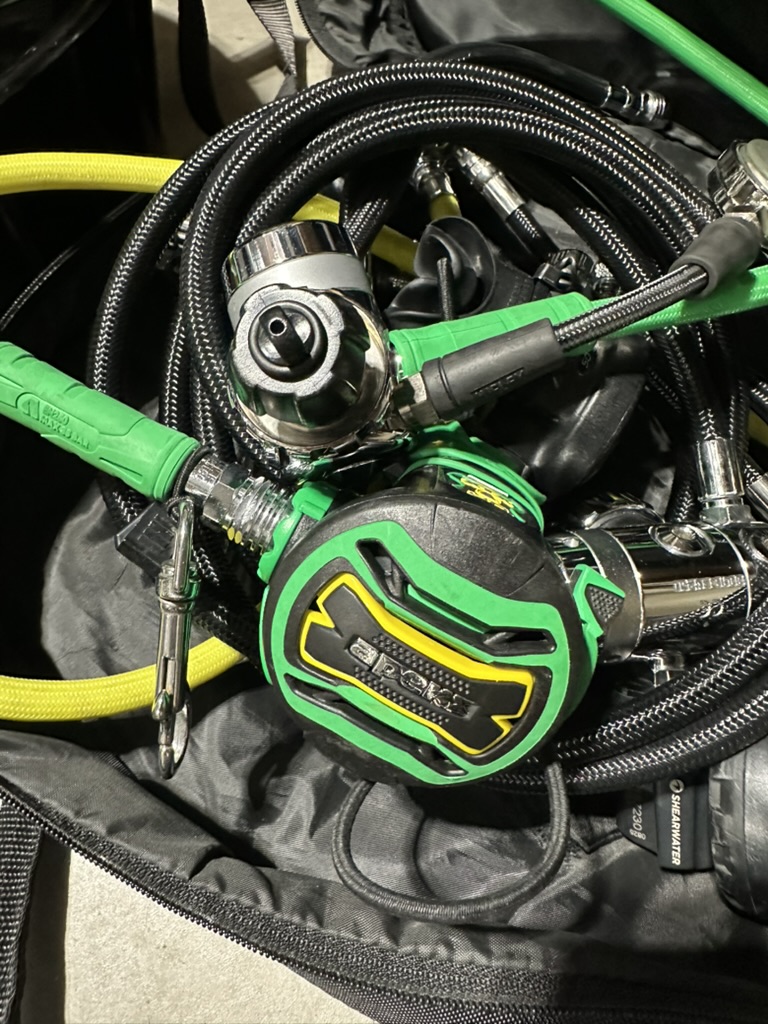
Oxygen Compatible Deco Regulators
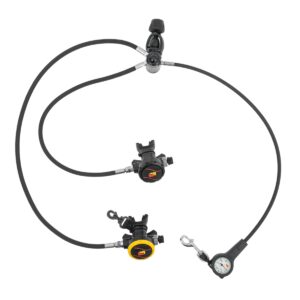
O2 clean deco regs are really only of interest to a small subset of divers. A deco reg, or “oxygen clean, accelerated decompression regulator,” is required to safely use breathing gas mixtures above 40% oxygen content.
If “oxygen clean,” or “oxygen service” are in your diving vocabulary, you likely already know why you need O2 compatible deco regulators. But, in the interest of informing those considering technical diving, or anyone that’s just curious, I’ll provide a little background.
Decompression Diving
 I’ve stated many times, all dives are “decompression” dives. Anytime a diver dips beneath the surface, his or her tissues absorb inert gas—mostly nitrogen. In order to surface safely, it is critical to ascend at a rate slow enough to get rid of the excess nitrogen through respiration. As long as you can make a slow, direct ascent to the surface, we consider that, somewhat erroneously, a “no-decompression” dive.
PADI and some other scuba training agencies have begun using the term, “no stop dive” as a replacement term. I believe it is more accurate and also, more descriptive. However, the initials, NDL, short for No Decompression Limit, are still widely used to indicate how long you can stay at a given depth without the need to delay your ascent by making “decompression stops.”
A decompression stop is a pause inserted into your ascent at a specific depth to allow your body additional off gassing time prior to reaching the surface. This differs from a “safety stop” in that it is mandatory for keeping absorbed nitrogen from forming bubbles. That’s what causes decompression sickness (DCS), often called “the bends.”
Getting the bends sucks, so we want to avoid that.
Technical Diving

Technical diving is a blanket terms for dives beyond the limits of simpler, recreational dives. When you conduct a recreational dive to say, 60 feet, most computers or tables (remember those?) allow around 55 minutes at that depth as the “limit” before actual decompression stops would be required on your way to the surface. 55 Minutes, then, is the “no decompression limit” (NDL) for a dive to 60 feet.
As mentioned, technical diving involves making dives beyond any of the various recreational limits. Your NDL is one of them. The absolute maximum depth of 130’ is another. Overhead environments, like wrecks or caves are also examples of technical dives. Most of the time, rebreather diving falls under the technical diving label due to complexity.
Technical Decompression Diving
A signature element in many, if not most, technical dives is “mandatory decompression.” I stated at the onset that every dive involves “mandatory” decompression (your slow ascent), but as a matter of convention, a “decompression” dive is one requiring pauses during your ascent.
Those pauses are called decompression “stops,” which is why the term, “no stop diving” is gaining ground.
Decompression stops typically range from 1 minute to as much as an hour, even more, at 10 foot increments. A simple dive using air or Nitrox that requires minimal decompression (5-10 minutes at 20’ and/or 10’) doesn’t require any additional gas or equipment.
However, deep decompression dives involving long decompression, and especially the use of helium-based bottom and deep deco gasses, may not even be possible without the use of high oxygen mixes on the way to the surface.
That’s where oxygen compatible decompression regulators come in.
Gas Switch Accelerated Decompression Dives
I’ll talk about the best O2 compatible deco regs in a minute. First, here’s an example why high oxygen and pure oxygen matter.
Trimix Dive to 220’ Salt Water
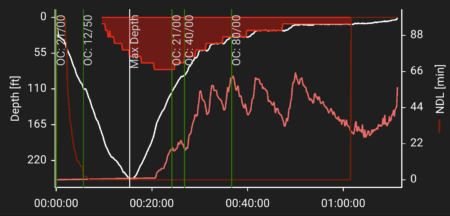
Using Trimix 18/35 (18% O2, 35% Helium) on the bottom, plus Air, EAN40 and EAN80 for decompression, a diver will spend a total of 99 minutes underwater. 69 of those minutes are spent off gassing by making decompression stops every 10 feet starting at 110 feet. That’s a long time and a lot of decompression stops.
The final 3 stops at 30’, 20’ and 10’ would be spent breathing EAN80. For that, you need and oxygen compatible deco regulator. Connecting and pressurizing a regulator that’s only cleaned for up to 40% is begging for a fire or explosion—even underwater!
For comparison, if you take out the high oxygen (EAN80) mix, you’ll add close to 30 minutes of decompression time. That’s a lot, especially in cold water. Some extreme dives require hours of decompression time, so the use of high O2 mixes becomes even more important.
O2 Compatible Deco Regulator
It takes a lot of training and experience before making these kinds of technical dives. Those of us who do them tend to be rather passionate about it. We also obsess over dive gear—at least I do—regulators in particular.
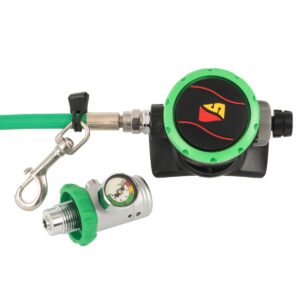
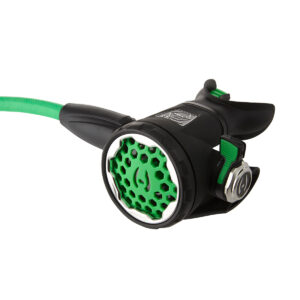
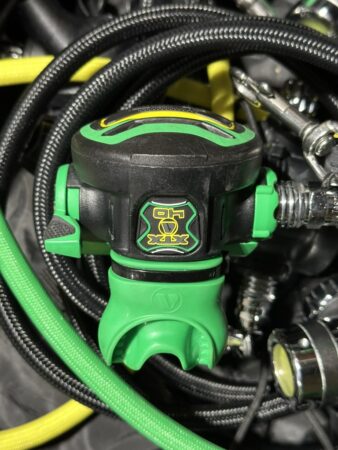
Among the technical divers I regularly dive with, most use one of three oxygen compatible regulators. At the high end is the Apeks XTX40/DS4 Oxygen Regulator. Next, I see A LOT of divers using the Dive Rite O2 Deco Regulator. A few divers I know use older OMS Oxygen Deco regulators, and finally, quite a few divers clean their normal regulators for oxygen service.
I personally dive with the Apeks XTX40/DS4 Oxygen Regulator. However, may not be the oxygen deco regulator I would buy today. The current version of the Dive Rite O2 Deco Regulator wasn’t available when I was in the market for deco regs. I never really liked the OMS (feels cheap) and I definitely didn’t want to O2 clean one of my other regulators.
Considerations for an O2 Compatible Deco Regulator
I feel strongly that the number one consideration when choosing a deco regulator is reliability. It needs to work and it needs to not catch on fire or blow up.
The next most important thing is ease of maintenance. Keeping your oxygen compatible regulator oxygen compatible requires servicing with special, oxygen compatible lubricants and using parts made of non-combustable materials when subjected to a combination of elevated oxygen levels and heat.
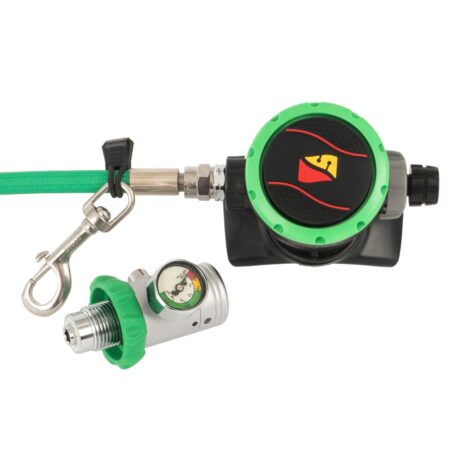
The Dive Rite O2 Deco Regulator meets both requirements easily for half the price of the Apeks XTX40/DS4 Oxygen Regulator. It undeniable that the Apeks is a much higher performance regulator. But, the ONLY time you need a high-end regulator in shallow water is if free flow due to freezing is a risk.
I have never had an Apeks XTX40 or XTX50 free flow. I have spent many hours decompressing on the Dive Rite O2 reg, but never in cold water. I’m confident it will perform just fine, but I KNOW the Apeks will. It’s probably time to do some extreme cold dives with the Dive Rite.
Other Oxygen Deco Regulators
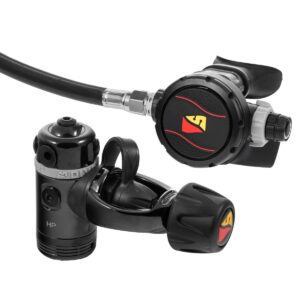
Anyone considering the Dive Rite O2 Deco Regulator will likely come across the DGX Gears FIRST/D6 O2/Stage Reg, which is slightly cheaper than the Dive Rite. I have a lot of experience with DGX regulators and like them. Two things to think about are (1) the second stage itself is black, whereby most other dedicated oxygen regs are green.
Trusting the color alone is not a substitute for proper gas switching technique, but it is absolutely an effective visual cue, especially for others on your dive team.
The other consideration, however unfair, is that your local dive shop may refuse to service your DGX Gears regulator. They may not even be able to. I’ve also heard of shops charging an arm and a leg compared to servicing other regulators. This is simply a byproduct of the competitive environment and not a reflection of DGX Gears quality at all.
For my money, a few extra dollars for a green second stage and better known brand makes sense.
More popular in Europe, but available here is a O2 Deco Regulator made by Sopras Tek. It is usually priced even below DGX Gears. I just can’t see saving $50 to create a future hassle for getting service.
Servicing Oxygen Clean Deco Regulators
I’ve touched on service a few times already. Servicing O2 clean regs is a far more meticulous and specialized process compared to servicing the rest of your regulators. Not all shops are qualified to do it. Unless your local dive shop is experienced in supporting technical divers and works with high oxygen exposure, send your regs to Key Largo Dive Center for service.
Don’t risk a fire or getting blown up. Have all your other gear serviced locally, or wherever you want. Just trust oxygen service to oxygen service experts.
As a side note, there’s been a bit of a parts delay on Apeks. I’m okay for now, but a buddy of mine’s rebreather is out of service until he can get the Apeks first stage parts to oxygen clean a first stage (regulator for the O2 side of his KISS Classic). Supposedly, they’ll be shipping those any day now.
Parts availability is a serious consideration. For the most part, you won’t have a problem with name brand regulators. Oddball brands and stuff that’s not often used in your local area can be a challenge.
Which Oxygen Deco Regulator Should You Choose?
For me, it comes down to two: Either the Dive Rite O2 Deco Regulator, or the Apeks XTX40/DS4 Oxygen Regulator. If price is no object and you dive in extremely cold water, the Apeks might make sense. Otherwise, for my money, Dive Rite is my runaway favorite.
I own several Dive Rite regulators and have never had a hint of a problem with any of them. Their O2 Deco reg is $299, compared to $625 for the Apeks, leaving you $325 to spend on other dive gear, or a plane ticket to someplace like Key Largo!
As always, I’m open to other opinions and would love to get your thoughts. In the mean time, safe diving! – 🐠